Posts

Spiritual Import of Religious Festivals :Ch-4. Part - 7.

Image
 Chapter-4. Swami Sri  Adi  Sankaracharya - The Genius ( Sankara Jayanti ) :  Part-7. In a third stratum of thought in this march of social history, these very divinities which were thus propitiated, began to be recognised as being almost like human individuals.  Now they can get angry as any human being can get angry and they can also be pleased as any human being can be pleased.  Perhaps they could even be bribed through various types of offering.  Thus we hear of contention among the very gods and fights among the celestials, which is really very strange.  How could the gods fight amongst themselves?  But that is envisaged by the mind which studied the gods and the celestials in the light of human nature.  As we are, so the gods also are.  So, as we please people,  we have to please the gods also in the very same way, applying the same methodology as we apply towards human beings....

Spiritual Import of Religious Festivals :Ch-4. Part - 6.

Image
 Chapter-4. Swami Sri  Adi  Sankaracharya - The Genius ( Sankara Jayanti ) :  Part-6. These Mantras which were visibly recorded for posterity became objects of study and also vehicles for invocation of the many gods. To the originators of these Mantras, the gods were not manifold; they were the many phases of the One. But, now, they lost their connection with the original unity or the background, and only the phases are seen as the multifarious divinities presiding over the quarters of the cosmos – Indra, Agni, Varuna, Mitra, Aryama and many such celestials. These deities began to be invoked through the very same Mantras which were originally the revelations of the sages. While in the original Samhitas, in their primordial condition, they were effects of a diviner experience, now they became a cause rather than an effect of an invocation of these multifarious gods. We invoke these gods by placation, by propitiation, by begging and by requesti...

Spiritual Import of Religious Festivals :Ch-4. Part - 5.

Image
Chapter-4. Swami Sri  Adi  Sankaracharya - The Genius ( Sankara Jayanti ) : Part-5. This is a slightly posterior period to that of the exuberance of the Veda Samhita Mantras wherein there was only a spontaneous spiritual outpouring of devotion to the One on account of Its having been recognized in realization, in direct experience. But, when we make a study of these outpourings, they do not look like the manifestations of the One Experience. All study that is historical is esoteric, prosaic, mechanized and sensory, and hence the esoteric significance that was the background of the very origination of these Veda Mantras got lost in the process of time, in the passage of history. The outward form and the visible significance as hymns offered to the various centers of divinity – the many gods, as they usually say – got emphasized, and these gods became not only objects of reverence, but also objects of fear. It was not that gods were always beneficent. T...

Spiritual Import of Religious Festivals :Ch-4. Part - 4.

Image
Chapter-4. Swami Sri  Adi  Sankaracharya - The Genius ( Sankara Jayanti ) : Part-4. The most catholic definition of the Supreme Reality we have is given to us for the first time given in the body of the Rigveda Samhita : Ekam Sat – the One Being, One Reality, One Substance, One Existence that the sages recognise and designate as the manifold. In various ways they sing of the glories of this One Mighty Being. But on the other hand, for pure exoteric observation, it would rather look like an acceptance of polytheism or the worship of many gods, as if there is a real multiplicity of the realm of the Adhidaiva, as a counterpart to the multiplicity that we see in the realm of the Adhibhuta or the physical world. The variety of the physical world became the source of a susceptible feeling in the minds of people later on, through the passage of time, that, perhaps, the souls also are many and the gods also are many, because the objects in the world are many! ...

Spiritual Import of Religious Festivals :Ch-4. Part - 3.

Image
Chapter-4.Swami Sri  Adi  Sankaracharya - The Genius ( Sankara Jayanti ) : Part-3. It was a spontaneity of feeling which was, in a sense, a natural result of the intuition of the sages. Throughout the Samhitas, if we make a deep study of them, we will see spread out in various places, thoughts and devotional feelings in their various emphases and stresses, all beckoning the aspiration of the human soul to what is implied and what is hidden behind the manifested phenomena. Now here, in this psychological situation of mankind, we have a twofold significance from the point of view of cultural history. On the one hand, it was a visible expression of an inner realisation by which the sages plumbed the depths of infinity and proclaimed for all eternity and to all mankind : "Ekam sat viprah bahudha vadanti, Indram Varunam Mitram Agni...." All the variety, whether in the field of the Adhidaiva (the transcendent, the presiding principle) or the Adhibhuta (the ...

Spiritual Import of Religious Festivals :Ch-4. Part - 2.

Image
Chapter-4.Swami Sri  Adi  Sankaracharya - The Genius ( Sankara Jayanti ) : Part-2. This is the specific characteristic of the time of the Veda Samhitas – to visualise and to behold the Creator in what is created, and to see the One in the many. Destiny, perhaps, willed that this should be the beginning of our cultural history so far as it can be recollected by our memories and available data, historically as well as archaeologically. The Samhitas of the Vedas are spontaneous hymns and prayers offered to God in His multifaceted manifestation as this cosmos. To the sages of the Veda Samhitas, the rise of the sun was a manifestation of God. It was the glorious God Aditya that was rising. The dawn was a manifestation of divinity. Similarly, the sunset had its own glory, revealing the divinity of God. The heat of summer, the pouring rains, the cold of winter, and the changing seasons – all that is visible as well as conceptual became a vehicle for enshrinin...

Spiritual Import of Religious Festivals :Ch-4. Part - 1.

Image
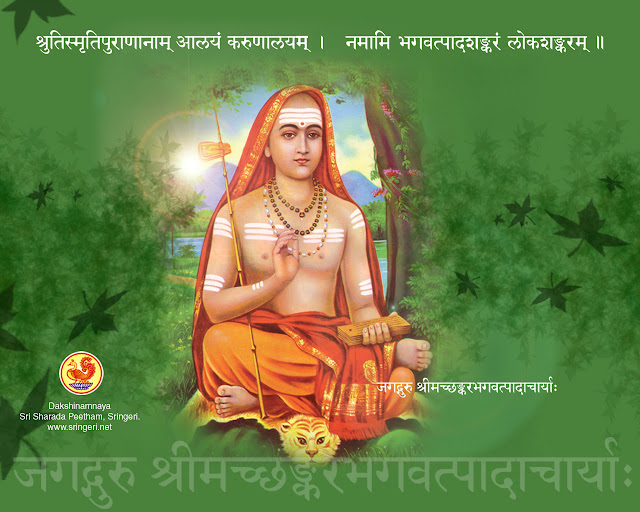
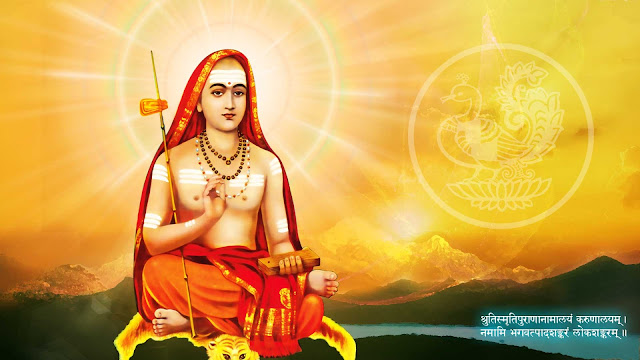
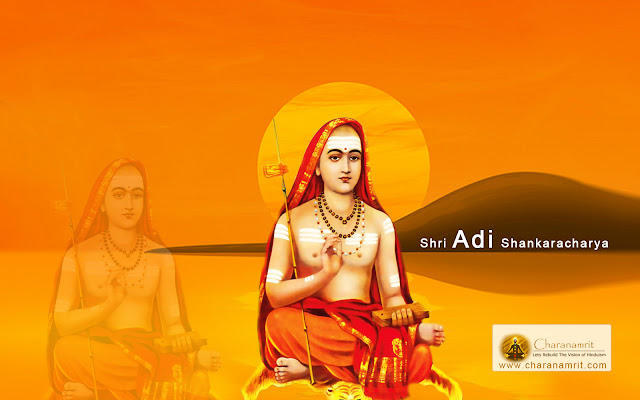
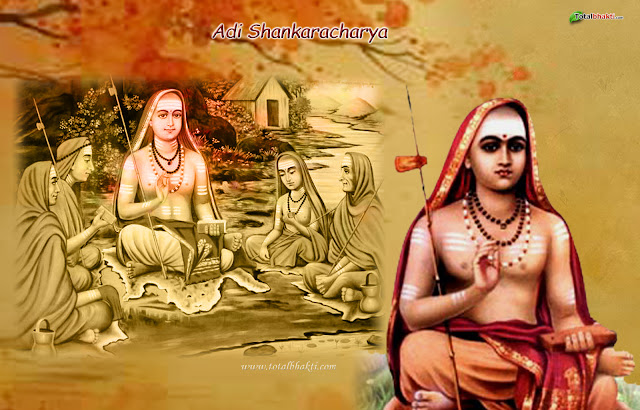
Chapter-4.Swami Sri  Adi  Sankaracharya - The Genius ( Sankara Jayanti ) : Part-1. Vaisakha Sukla Panchami, the fifth day in the bright fortnight in the month of April-May, when we celebrate the advent of the great Acharya Sankara who is often referred to, by his followers, as Bhashyakara (the commentator on the Prasthana Traya – the Brahma Sutras, the Upanishads and the Bhagavadgita). The famous and unforgettable event of his life and work is a consequence of the chronology of social history as well as a consequence of the logic of human thought. The immortal service that he has done for the world is thus an outcome of a chronological process as well as a logical one. First of all, let us see what the chronological significance of the work of Acharya Sankara is, in the social history of India in particular and the world in general. Chronology is the sequence of history, and if we trace back the condition of the human society, particularly in India, durin...