Posts

Spiritual Import of Religious Festivals :Ch-5. Part -15.
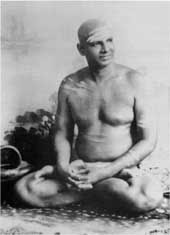
Image
Swami Sivananda Chapter 5: Sivananda – The Fire of Sannyasa Part-15. The Isavasya Upanishad says, “Isavasyamidam sarvam, yat kincha jagatyam jagat.”— Whatever is moving or unmoving, sthavara or jangama, whatever is visible or invisible, all this is indwelt by the Supreme Being of God. The Upanishad also says, “Tena tyaktena bhunjithah.”—Here is the seed of vairagya and sannyasa at the very commencement of the Isavasya Upanishad. It says, “Renounce and enjoy.” Enjoy by renunciation, not by possession. The enjoyment that comes by renunciation is more intense than the enjoyment that comes by possession of the things of the world. That satisfaction or pleasure or enjoyment which seems to come to us by the acquisition of the objects of sense is a pain that comes to us in the guise of satisfaction. But that joy which comes to us by renunciation is a real and permanent joy. Why is it so? It is because renunciation is the relinquishment of false values, the abandonment of ...

Spiritual Import of Religious Festivals :Ch-5. Part -14.

Image
Swami Sivananda Chapter 5: Sivananda – The Fire of Sannyasa Part-14. He had no disciples, and he never said that he had any disciples. On the other hand, he positively used to say, “I have no disciples.” He also used to say that he had no organisation or ashram. He was the same Swami Sivananda who came to Rishikesh in the year 1922 under the name of Kuppuswamy, the same Swami Sivananda who lived through the life of Sannyasa and spirituality and service to mankind, and it was the same Swami Sivananda who attained Mahasamadhi in the year 1963 without any change in his attitude to this world. Such are the sparkling ideals that he set forth before us. Every first of June, we celebrate and observe the anniversary of this momentous event of his entering into Sannyasa, many years back. And no greater homage could be conceived to this saint than a sincere determination to lead the life that he himself intensely led, and to develop a similar attitude towards life...

Spiritual Import of Religious Festivals :Ch-5. Part -13.

Image
Swami Sivananda Chapter 5: Sivananda – The Fire of Sannyasa Part-13. We need not make another statement about it. Vairagya, or sannyasa, is the necessary result that follows spontaneously and logically from the acceptance of the reality that the goal of life is God-realisation. If the goal of life should be God-realisation, God should be the Reality, because we cannot regard an unreality or a lesser reality as the goal of life. Only that which is Real can be the goal; the unreal cannot be the goal of life, nor can a partial reality be the goal of life. It is the full Reality that alone can be the goal of life. So, God has to be the fullest of realities. And that which is fully Real has to exclude everything else that is tagged on to it externally by associations temporarily contrived by the weaknesses of the flesh. So the Sannyasa of Satgurudev Swami Sivanandaji Maharaj was an inner spiritual fire which burnt forth in his practical life and in his teachings, and in...

Spiritual Import of Religious Festivals :Ch-5. Part -12.

Image
Swami Sivananda Asramam- Chapter 5: Sivananda – The Fire of Sannyasa Part-12. Most of his earlier writings began with this proclamation : “The goal of life is God-realisation.” He would commence his work—be it a book, or an essay, or a message, or even a lecture—with the sentence, “The goal of life is God-realisation.” Slowly, this concept is becoming more and more academic these days, i.e., it is accepted only by the intellect as a logical conviction and a rational acceptance of spiritual values but has little bearing on the practical life of people. But to saints of the type of Swami Sivanandaji Maharaj, it was a calling of life and not a mere intellectual conviction or a rational acceptance. When we say that the goal of life is God-realisation, we have said everything that needs to be said. Vairagya, renunciation or sannyasa, spontaneously flows from the acceptance, from the heart, of the fact that the goal of life is God-realisation. It follows as a neces...

Spiritual Import of Religious Festivals :Ch-5. Part -11.

Image
Swami Sivananda Asramam- Chapter 5: Sivananda – The Fire of Sannyasa Part-11. 1st of June,  being Sri Gurudev’s Sannyasa anniversary, we should contemplate on the spiritual spark that blazed itself forth as the great Swami Sivananda Saraswati whose presence and tapas, whose spirituality, goodness and large-heartedness became the nucleus and the seed for this large institution which vibrates today in the hearts of many people in the world—not as buildings or constitutions, not as visible bodies or institutions, but as spiritual aspirations, noble longings for God-realisation, charitableness in nature and a conviction that the realisation of God is the only goal of life. “God-realisation first, everything else afterwards.” This was, is and will forever be the teaching of this saint. Everything else follows automatically from this great surging longing of the heart. There are very few who could so forcibly proclaim this most unpalatable of truths that God-realisati...

Spiritual Import of Religious Festivals :Ch-5. Part -10.

Image
Swami Sivananda Asramam- Chapter 5: Sivananda – The Fire of Sannyasa Part-10. It is very unfortunate that we have no information as to what transpired between him and his Guru, his austerities, and what sort of meditation he practised. His reply to queries from his disciples was: “You do not bother about what I did, but you do what I say.” From the attitude he held in regard to life, till late in his life, we could gather by reading between lines that he was a combination of the heights of Vedanta philosophy and the pinnacle of austerity or tapas. He used to define tapas as “flaming like fire by sense-control”. One day he put a question to me: “What is tapas? Can you define it?” But, before I could say anything, he himself gave the definition: “Tapas is burning like fire by sense-control.” I remember this definition even today. Tapas is the heat that is produced in our spiritual body by the control of the senses, as their outward movement depletes our energy a...

Spiritual Import of Religious Festivals :Ch-5. Part -9.

Image
Swami Sivananda Asramam- Chapter 5: Sivananda – The Fire of Sannyasa Part-9. But this one rupee, Swami Sivanandaji Maharaj never used to spend for himself. He purchased some medicines or a cup of curd—not for himself, but for a neighbour who was sick, suffering from dysentery. We know very well that dysentery was quite common among sadhus, as they were compelled to eat a diet without any fat or anything soothing to the walls of the stomach and intestines. Illness was very common, especially diarrhoea and dysentery. They were the common illnesses of having a dry stomach, without any lubrication. Swamiji used to purchase a little curd and a little medicine and then started his philanthropic activity in a meagre way, which culminated in a small dispensary in Laxmanjhula called Satya Sevasrama. It became a government hospital, and it was functioning until recently. Now it is closed. Thus he commenced his ministry of humanitarian and spiritual service which con...